
During Women’s History Month, we want to honor, respect, and pay tribute to the Indigenous women leaders of Na’ah Illahee Fund’s Board of Directors, who are on the frontlines of upending and transforming philanthropy.
We hold in high honor Na’ah Illahee’s board members: Brooke Pinkham (Nez Perce), Bernadette Zambrano (Chicana), Jeanne Jackson (Quileute/Quinault), Charlotte Coté (Tseshaht/Nuu-chah-nulth), Kimberly Deriana (Mandan/Hidatsa) and Bridget Ray (Ojibwe/Michif). We also honor our past board members for their guidance and wisdom.
These Indigenous women who steward and lead Na’ah Illahee Fund are matriarchs, mentors, mothers, aunties, cousins, friends, and sisters. In most Indigenous communities, women have always played a crucial role as caretakers of the community and the sacredness of Mother Earth. Drawing upon the matriarchal wisdom of generations before, Indigenous women are taught to step up and do the work, doing whatever is necessary, to protect and strengthen the community. The women leading Na’ah Illahee Fund are doing precisely this by igniting sustainable pathways to the flourishing and prosperous well-being of Indigenous communities in our region. In leading our organization, they are fiercely rejecting mainstream philanthropy’s hierarchical tenets and replacing them with Indigenous philanthropy practices.
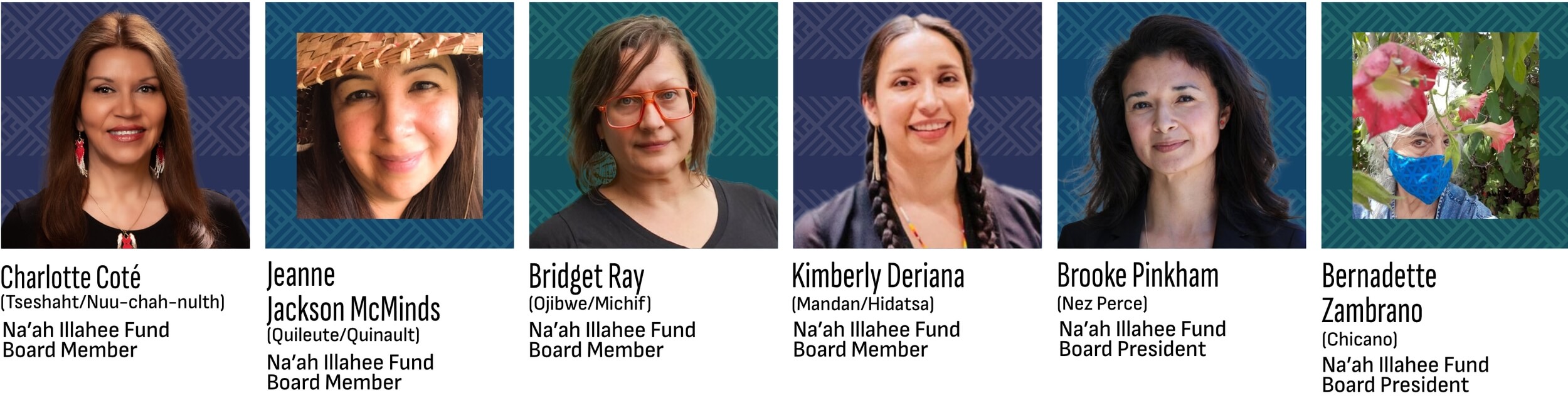
“Na’ah Illahee Fund creates transformative spaces that nurture Indigenous individual and community growth with an overarching vision to nourish and cultivate healthy and sustainable Indigenous Nations,” says Charlotte Coté (Tseshaht/Nuu-chah-nulth) professor of American Indian Studies at the University of Washington. “As a Na’ah Ilahee Fund board member, I feel deeply honored to work with an amazing team of people and I am truly inspired by their commitment to racial, gender, climate, food, and social justice.”
Since the beginning of our organization, Indigenous women leaders have forwarded Indigenous philanthropic principles, which function differently than institutional philanthropy. Though Indigenous cultures are richly diverse, we embrace common philanthropic values that are shared by Indigenous peoples internationally.
Indigenous philanthropy values embrace systems that are collaborative rather than hierarchical; holistic and intersectional rather than segmented and divisive; relational instead of transactional, and inclusive rather than exclusionary. These values are a sound rejection of the colonizer model of philanthropy, which depends upon an unequal power dynamic for its perpetuation and survival. International Funders for Indigenous Peoples (IFIP) is leading this conversation. You can visit their website here IFIP.
In February of 2023 Coté and Susan Balbas, Na’ah Illahee Fund’s executive director had the honor of attending the IFIP 2023 Global Conference in Merida, Yucatán, Mexico 2023.
“This was such an incredible conference! The sessions explored important issues such as self-determination, the Land Back movement, political, economic, cultural, and food sovereignty, and protection of women’s and LGTBQ rights,” recalls Coté. Attendees shared personal stories of how colonialism, poverty, food insecurity, environmental and social injustice, and the global climate crisis have affected their communities and created challenges to exercising their political and cultural autonomy. “I left feeling greatly inspired by the important work being done by Indigenous peoples throughout the world in uplifting their communities and creating respectful partnerships with philanthropic organizations that fund these grassroots initiatives.”
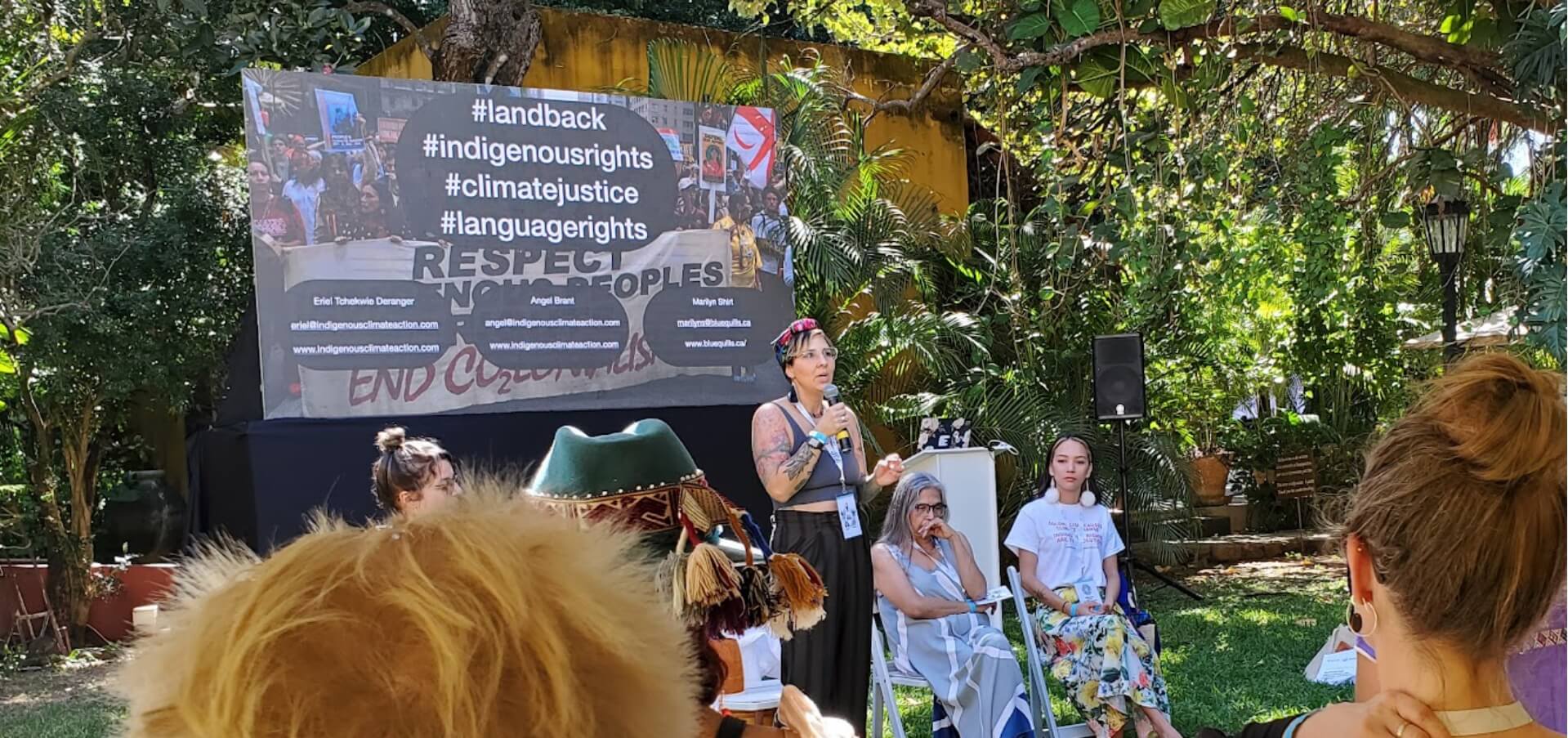
IFIP 2023 Global Conference, Merida, Yucatán, Mexico
In 2020, Na’ah Illahee Fund participated in a IFIP working group contributing to a report intended “to amplify the voices of Indigenous leaders and Indigenous-led funds so that calls for stronger support can be answered.” The full report can be accessed here: IFIP-Indigenous Ways of Giving and Sharing Landscape Scan Report
Among other things, the report is a roadmap for mainstream funders wanting to partner with Indigenous-led groups and calls on partners to trust in Indigenous knowledge, systems of governance, and ways of doing grantmaking.
“Indigenous women believe in co-investment. Not the kind that generates profits, but the co-investment that produces the transformation of inequalities,” write Teresa Zapeta and Lucy Mulenkei in their article “Indigenous women changing philanthropy” (IFIP’s Alliance Magazine March 2020).
At Na’ah Illahee Fund, we co-invest in our communities with an eye toward just that kind of complete transformation of philanthropy.
“From the beginning of Na’ah Illahee Fund, we’ve embraced and promoted a different way of giving, grounded in Indigenous values and sovereignty,” says Balbas. “From our early Women’s Giving Circles onward, we’ve drawn our wisdom and strength from our communities. Our communities know best what solutions are needed. Our purpose is to provide strategic support and then trust in the wisdom of Indigenous community leaders. We welcome partners in the work, but any funders we partner with will need to understand that this is how we operate.”
Over the years, this strategic support has included programs designed to provide Indigenous leaders with the tools they need to share and build knowledge, regenerate systems and cultures, and support long-term sustainability and sovereignty for Native communities across the Pacific Northwest, with an emphasis on lifting up womxn. Through intergenerational wisdom Na’ah Illahee Fund understands the responsibility to lift up and support our emerging Indigenous womxn leaders. We know that when Indigenous womxn lead, the future of our communities is stronger.
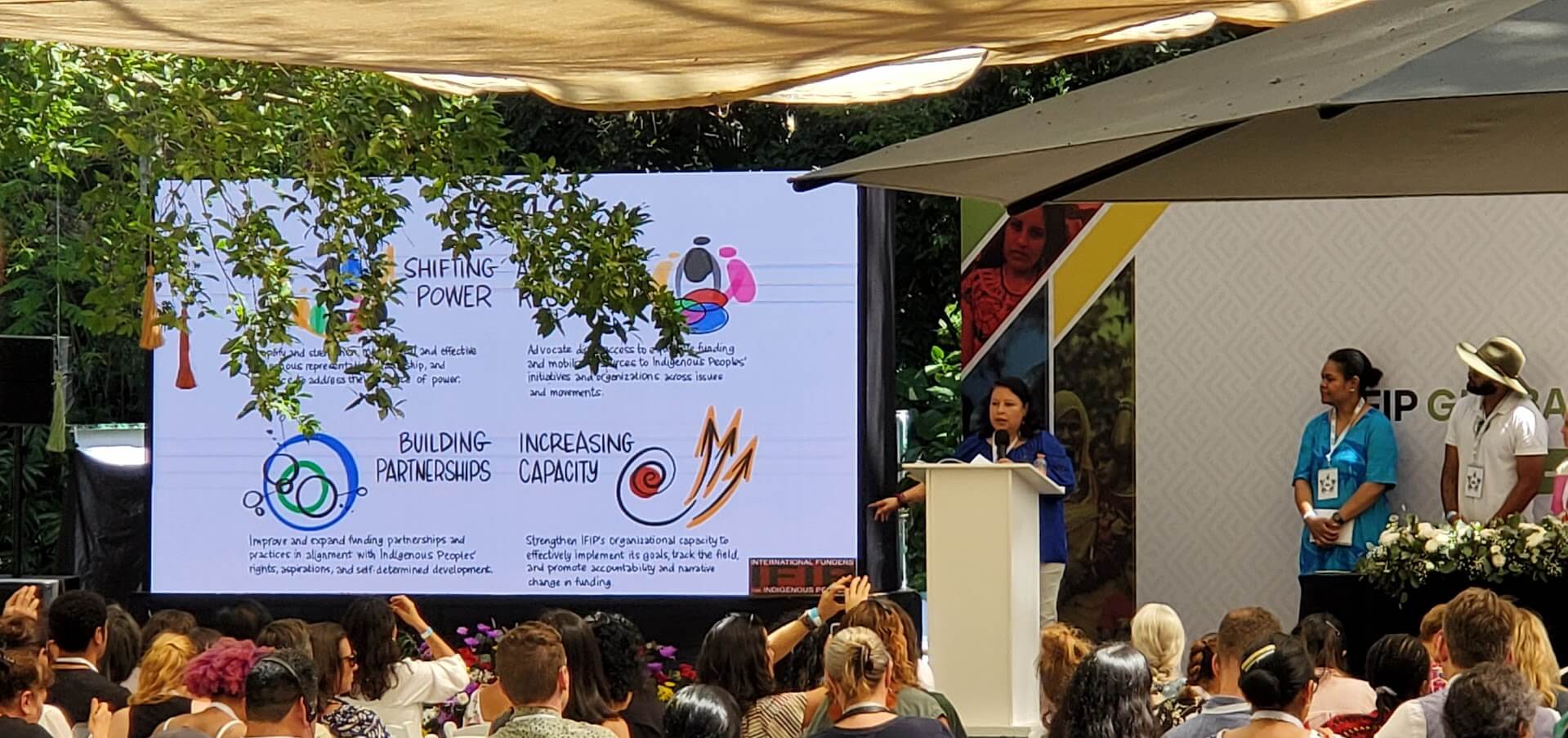
IFIP 2023 Global Conference, Merida, Yucatán, Mexico